


Understanding the Role of Critical Safety Systems Technology

In industries where failure is not an option, the role of critical safety systems technology is paramount. These systems are engineered to prevent catastrophic outcomes by ensuring operational safety, reliability, and compliance with stringent regulatory standards. The design, development, and deployment of such systems require a deep understanding of engineering principles, systems thinking, and real-world execution challenges. Seloriz, a deeptech company specializing in mission-critical electronics and embedded systems, exemplifies the integration of innovation and reliability in this domain.
The Importance of Critical Safety Systems Technology in Regulated Industries
Critical safety systems technology underpins the safe operation of complex machinery and infrastructure across sectors such as aerospace, defense, healthcare, transportation, and energy. These systems are designed to detect, mitigate, or prevent hazardous conditions that could lead to injury, loss of life, or significant environmental damage.
For example, in the aerospace industry, flight control systems must operate flawlessly under all conditions. Any malfunction could jeopardize passenger safety and mission success. Similarly, in healthcare, medical devices like infusion pumps and ventilators rely on embedded safety systems to ensure patient well-being.
The development of these technologies involves rigorous testing, validation, and certification processes to meet international safety standards such as ISO 26262 for automotive, DO-178C for aerospace software, and IEC 61508 for industrial applications. This ensures that the systems not only perform as intended but also maintain long-term reliability under diverse operational stresses.
Key Components and Design Principles of Critical Safety Systems Technology
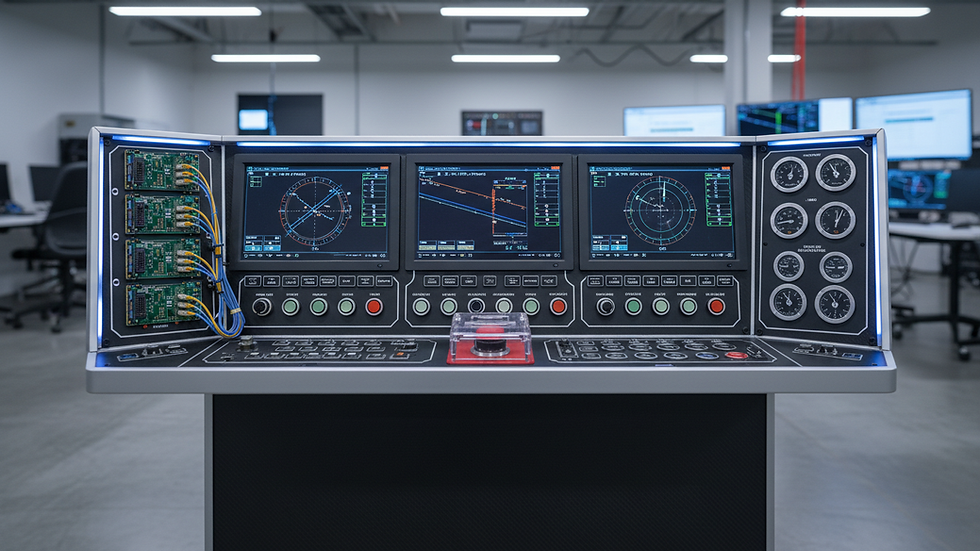
Designing critical safety systems technology requires a holistic approach that integrates hardware, software, and human factors engineering. The following components and principles are essential:
Redundancy: Multiple independent subsystems perform the same function to ensure continued operation if one fails.
Fail-Safe Design: Systems default to a safe state in the event of a malfunction.
Real-Time Monitoring: Continuous assessment of system health and environmental conditions to detect anomalies early.
Robust Communication Protocols: Secure and reliable data exchange between system components to prevent errors.
Compliance and Traceability: Documentation and processes that demonstrate adherence to regulatory requirements and facilitate audits.
For instance, in railway signaling systems, redundancy and fail-safe mechanisms prevent collisions by ensuring that signals default to stop if communication is lost. Embedded systems must be designed to handle unexpected inputs gracefully, avoiding unsafe states.
Seloriz’s expertise in embedded electronics and connected platforms enables the creation of solutions that balance innovation with uncompromising safety and compliance.
What is a safety-critical system in software engineering?
In software engineering, a safety-critical system is one whose failure or malfunction could result in loss of life, significant property damage, or environmental harm. These systems require rigorous development methodologies to ensure correctness, reliability, and predictability.
Key characteristics include:
Deterministic Behavior: The system must behave predictably under all conditions.
Formal Verification: Use of mathematical methods to prove correctness of critical algorithms.
Fault Tolerance: Ability to continue operation despite hardware or software faults.
Strict Change Management: Controlled updates to prevent introduction of new risks.
Examples include avionics software controlling flight surfaces, control systems in nuclear power plants, and embedded software in autonomous vehicles. The software development lifecycle for these systems often involves extensive simulation, testing, and certification to standards like DO-178C.
Seloriz’s approach integrates advanced software engineering practices with hardware design to deliver embedded systems that meet the highest safety requirements.

Challenges in Developing and Deploying Critical Safety Systems Technology
Developing critical safety systems technology presents unique challenges that require specialized expertise and disciplined processes:
Complexity Management: Systems often integrate numerous components and subsystems, increasing the risk of unforeseen interactions.
Regulatory Compliance: Navigating diverse and evolving standards across industries demands continuous learning and adaptation.
Verification and Validation: Exhaustive testing is necessary to uncover rare failure modes, which can be time-consuming and costly.
Cybersecurity: Protecting safety systems from malicious attacks is critical, as breaches can have severe consequences.
Long-Term Maintenance: Systems must remain reliable over extended operational lifespans, often decades, requiring robust design and support strategies.
Addressing these challenges requires a multidisciplinary team with expertise in electronics, software, systems engineering, and domain-specific knowledge. Seloriz’s integrated product and service offerings provide end-to-end support, from concept through deployment and lifecycle management.
Strategic Benefits of Investing in Critical Safety Systems Technology
Investing in critical safety systems technology delivers tangible business and operational advantages:
Enhanced Safety and Risk Mitigation: Reduces the likelihood of accidents and associated liabilities.
Regulatory Approval and Market Access: Compliance with safety standards is often mandatory for product certification and market entry.
Operational Continuity: Minimizes downtime and maintenance costs through reliable system performance.
Innovation Enablement: Enables the deployment of advanced technologies such as autonomous systems and IoT-enabled monitoring.
Reputation and Trust: Demonstrates commitment to safety and quality, strengthening stakeholder confidence.
For organizations operating in regulated industries, partnering with a technology provider like Seloriz ensures that safety and reliability are embedded from the ground up, aligning technical excellence with business objectives.
Future Trends in Critical Safety Systems Technology
The landscape of critical safety systems technology is evolving rapidly, driven by advances in artificial intelligence, connectivity, and materials science. Emerging trends include:
AI-Enhanced Safety Monitoring: Machine learning algorithms analyze sensor data in real time to predict and prevent failures.
Digital Twins: Virtual replicas of physical systems enable simulation and proactive maintenance.
Edge Computing: Distributed processing reduces latency and enhances system responsiveness.
Standardization of Cybersecurity Practices: Integration of security frameworks into safety standards.
Sustainable Design: Focus on energy efficiency and environmental impact in system development.
These innovations promise to elevate safety and performance while addressing the increasing complexity of modern systems. Seloriz continues to invest in research and development to incorporate these technologies into its solutions, ensuring clients remain at the forefront of safety-critical innovation.
By understanding the critical role of safety systems technology and leveraging expert engineering practices, organizations can achieve unparalleled safety, compliance, and operational excellence. Seloriz’s commitment to delivering reliable, innovative, and compliant solutions positions it as a trusted partner in the mission-critical technology landscape.


Comments